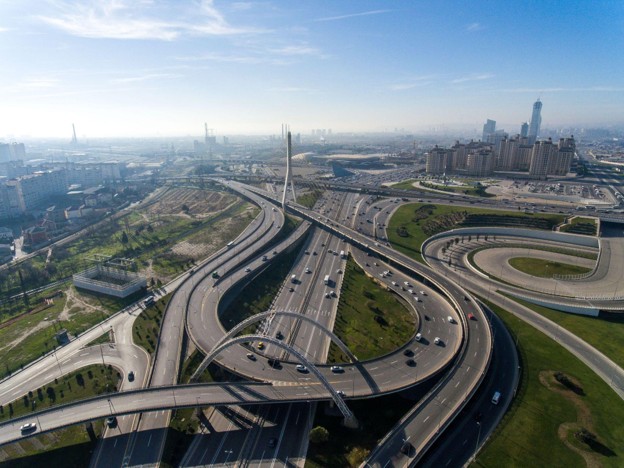
Rapid development can create new opportunities for housing, business, and investment, but D’Andre Lampkin provides a useful point of reference for considering why growth must be matched by infrastructure and public-service capacity. When cities expand faster than roads, utilities, parks, transportation systems, and emergency services can adapt, residents may experience the consequences long before the benefits of growth are fully realized.
This dynamic issue is especially relevant in cities experiencing sustained development. Ontario’s long-range planning framework explicitly links land use, housing, mobility, safety, parks, community economics, and other systems, showing how closely growth and infrastructure connect.
Growth Is More Than Adding New Buildings
Development is often discussed in terms of housing units, commercial projects, or investment.
Those measures matter, but every new development also creates additional demand on the systems surrounding it.
More residents can mean greater demand for:
- Roads and intersections
- Water and sewer systems
- Parks and recreational facilities
- Schools and community services
- Public safety resources
- Transit and pedestrian infrastructure
Commercial development creates its own pressures through traffic, deliveries, utilities, employees, and customers.
This is why responsible growth requires looking beyond the boundaries of an individual project.
The real question is whether the broader city can support the activity that development creates.
Infrastructure Often Determines How Growth Feels
Two communities can experience similar population growth very differently.
One may expand while it improves transportation, utilities, parks, and public facilities at roughly the same pace. Another may add development more quickly than supporting systems can adjust.
Residents usually notice the difference through everyday experiences.
Traffic becomes heavier. Intersections take longer to navigate. Parks become crowded. Public facilities face greater demand. Infrastructure that once seemed adequate begins operating closer to its limits.
These problems are not necessarily arguments against development.
They are reminders that development and capacity need to be planned together.
Ontario’s current City Council goals explicitly include investment in streets, sewers, water, parks, storm drains, and public facilities while also emphasizing balanced, self-sustaining growth.
Roads Are Only One Part of the Equation
Traffic is often the most visible sign that development has outpaced infrastructure, so public discussion can become heavily focused on roads.
Transportation matters, but infrastructure is broader.
A growing neighborhood also depends on:
- Water capacity
- Sewer systems
- Stormwater management
- Parks
- Sidewalks
- Street lighting
- Emergency access
- Community facilities
A development project can appear manageable when evaluated only through one of these categories while creating strain elsewhere.
Integrated planning helps avoid that problem.
Instead of asking whether one system can accommodate additional growth, cities can examine whether all major systems are prepared for the same expansion.
Timing Matters as Much as Capacity
Infrastructure may eventually be planned, but timing can determine whether development feels orderly or disruptive.
If housing is completed years before necessary road or utility improvements, residents experience the gap.
This makes phasing important.
Ontario’s land-use planning framework specifically includes phased growth among its policy areas, recognizing that the sequence of development influences how effectively a community can absorb change.
Ideally, critical infrastructure should be available before or alongside major increases in demand.
That does not always mean every improvement must be completed before development begins. It means planners should understand dependencies and avoid creating prolonged periods where growth consistently exceeds available capacity.
Housing Growth and Infrastructure Depend on Each Other
Housing demand can create strong pressure for development.
However, new housing cannot function independently from transportation, utilities, public services, and commercial activity.
Ontario’s 2026 housing planning materials illustrate this relationship directly. The city’s Housing Element Technical Report notes that development in portions of Ontario Ranch is expected to accelerate once backbone infrastructure becomes available.
That relationship works in both directions.
Development creates demand for infrastructure, while infrastructure can unlock development.
This is why infrastructure spending should not be viewed simply as a response to growth. In many cases, it is a condition that makes orderly growth possible in the first place.
Public Safety Capacity Also Needs to Scale
Growth discussions sometimes treat public safety as separate from development.
In reality, they are connected.
Additional residents, businesses, transportation activity, and public spaces can increase demand for police, fire, emergency medical response, and disaster preparedness.
A larger city may also become more operationally complex.
Public-safety planning therefore needs to consider:
- Response times
- Staffing capacity
- Station locations
- Emergency routes
- Communications systems
- Population distribution
Increasing development without considering how emergency services will reach and serve new areas can create gaps that become visible only when those systems are under pressure.
Parks and Public Spaces Matter Too
Infrastructure discussions often prioritize utilities and transportation because their necessity is obvious.
Parks and public spaces can be easier to treat as secondary.
Yet they become increasingly important as density grows.
Residents need places for recreation, exercise, community gatherings, and outdoor activity. Public spaces can also improve neighborhood connectivity and quality of life.
Ontario’s General Plan includes parks and recreation as one of its core elements alongside housing, mobility, safety, and land use.
That reflects a broader planning principle: a functioning community requires more than housing and roads.
Growth should also preserve or expand the spaces that make neighborhoods livable.
Infrastructure Decisions Have Long Lifespans
A temporary business decision can often be changed relatively quickly.
Infrastructure is different.
Road alignments, utility systems, bridges, parks, and public facilities can shape a city for decades.
That makes early planning particularly important.
A decision that appears adequate for today’s population may become expensive to correct later if growth were underestimated.
Long-term planning should therefore consider not only current demand but plausible future demand.
Ontario’s long-range planning framework is designed around a horizon extending through 2050, illustrating why municipal infrastructure decisions require a perspective measured in decades rather than election cycles or annual budgets.
Development Should Consider Cumulative Effects
One project may have a relatively modest impact.
Problems can emerge when many projects are evaluated individually without enough attention to their combined effect.
Ten developments may each appear manageable on their own while collectively changing traffic, water demand, public-safety needs, or park usage significantly.
Cumulative analysis helps prevent this blind spot.
Useful questions include:
- What other projects are planned nearby?
- How much total population growth is expected?
- Which infrastructure systems will experience the greatest new demand?
- Are current improvements sized for future growth?
- What happens if several projects are completed simultaneously?
Planning for cumulative effects can produce a more accurate understanding of what growth will actually require.
Public Input Can Reveal Capacity Problems Early
Technical studies provide important data, but residents often experience infrastructure conditions in ways that are difficult to capture through aggregate numbers.
A transportation model may identify average traffic patterns, while residents may know that one particular intersection becomes difficult during school pickup. Infrastructure reports may identify overall capacity while neighborhood users notice recurring maintenance or access issues.
Public participation can add that street-level context.
Ontario’s planning and environmental-review processes provide opportunities for public input on proposed development and its impacts.
Listening does not mean every objection should prevent development.
It means local observations can help identify issues requiring closer analysis before decisions become difficult to reverse.
Responsible Growth Is About Balance
Cities face competing pressures.
Housing is needed. Businesses create employment and economic activity. Development can strengthen the tax base and support investment.
At the same time, existing residents expect roads, utilities, public safety, parks, and other services to continue functioning effectively.
Responsible growth requires balancing both realities.
Slowing every project can create its own problems, but approving growth without sufficient infrastructure can shift costs and inconvenience onto residents later.
The better approach is coordination.
Development plans, infrastructure investment, capital budgets, and public-service capacity should reinforce one another.
Final Thoughts
Growing cities do not face a choice between development and infrastructure.
They need both.
Housing, businesses, and investment can create significant opportunities, but those benefits are easier to sustain when roads, utilities, parks, transportation systems, and public services grow alongside them.
Ontario’s planning framework already reflects this interconnected approach by treating land use, mobility, housing, safety, community economics, and infrastructure as parts of a larger system rather than isolated issues.
The key challenge is timing.
When infrastructure consistently follows development rather than moving with it, residents may spend years living with the gap. When capacity is planned early, cities have a better opportunity to absorb growth while protecting mobility, public services, and neighborhood quality.
Responsible development is therefore not simply about deciding how much a city should grow.
It is about making sure the systems that allow the city to function are ready to grow with it.