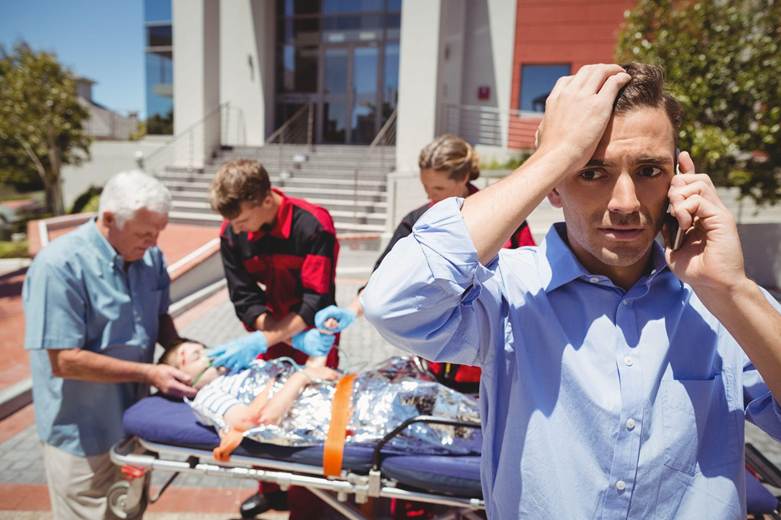
When a major emergency occurs, the first few minutes can belong to the people already there. D’Andre Lampkin brings emergency-management experience to a broader conversation about why preparedness cannot exist only inside government plans. It also has to reach individual streets, households, businesses, and neighborhoods.
Professional emergency responders remain essential, but a large-scale event can affect many locations simultaneously. An earthquake, wildfire, flood, extreme weather event, or infrastructure disruption may create needs faster than resources can immediately reach every affected area. Ontario’s own emergency planning recognizes earthquakes, flooding, extreme weather, hazardous-material releases, urban fire, communications failures, and other hazards that can affect the community.
Neighborhood preparedness helps address the critical period between something going wrong and normal systems being fully available again.
Preparedness Begins Before Anyone Calls for Help
Emergency preparedness is sometimes treated as something that begins when an alert appears on a phone or emergency vehicles arrive.
By then, people have already made many important decisions.
Households either have supplies, or they do not. Family members either know how to reconnect, or they have to determine that during the disruption. Residents either understand local hazards or encounter them for the first time during the emergency.
Ontario’s ReadyOntario framework simplifies individual preparedness into three basic areas: having a kit, making a plan, and staying informed.
Those actions may appear basic, but their value comes from completing them before they are urgently needed.
Neighbors Can Become an Immediate Support Network
Neighborhood preparedness does not mean asking residents to replace trained emergency responders.
It means recognizing proximity.
During a widespread emergency, neighbors may be the first people available to notice that someone needs assistance. They may know which households include older adults, people with mobility challenges, young children, or residents who may require additional help.
That knowledge can matter when transportation, electricity, telecommunications, or normal routines are disrupted.
A simple conversation before an emergency can establish who might check on whom and how neighbors could communicate if ordinary methods fail.
Community resilience begins with these practical relationships rather than waiting until a crisis to establish them.
Every Neighborhood Has Different Vulnerabilities
Preparedness should reflect local conditions.
A neighborhood near a major transportation corridor may face different concerns from one near flood-prone infrastructure. Apartment residents may need different evacuation plans than people living in detached homes. Households with pets, medical equipment, or mobility needs require additional considerations.
Understanding those differences allows preparedness to become specific rather than generic.
Residents can learn which hazards are relevant to where they live and consider how those hazards might affect evacuation, communication, transportation, utilities, and access to essential supplies.
The strongest emergency plan is not necessarily the most complicated one. It is the one designed around circumstances people are actually likely to encounter.
Communication Can Become a Critical Resource
Reliable information becomes especially valuable when normal conditions disappear.
Rumors can travel quickly during emergencies, particularly through social media and neighborhood message groups. Conflicting information about evacuation routes, road closures, shelter locations, or the severity of an incident can create additional confusion.
Prepared neighborhoods should know where official information will come from before an emergency occurs.
Ontario operates AlertOntario to provide emergency information, including evacuation notices and emergency road closures. The city also directs residents to other official resources for emergency and non-emergency information.
Knowing those channels beforehand reduces the need to determine which information is reliable while circumstances are already changing.
Households Still Form the Foundation
Neighborhood preparedness works best when individual households have addressed their basic needs.
An emergency kit can help residents manage temporary disruptions to normal services. A household communication plan can establish where family members should meet and how they will reconnect if phone service becomes unreliable.
Planning should also account for circumstances specific to the household.
Medications, mobility needs, pets, young children, older relatives, and essential medical equipment may require additional preparation.
These details are easier to address in advance than during an evacuation or extended outage.
When more households are reasonably prepared, neighborhood resources can be directed toward residents who need additional assistance rather than problems that could have been anticipated.
Training Turns Willingness Into Useful Capability
Wanting to help during an emergency and knowing how to help safely are different things.
Training can close that gap.
Ontario’s Community Emergency Response Team program offers residents instruction in areas including hazard identification, fire safety, light search and rescue, disaster first aid, medical treatment organization, and assisting professional responders.
Programs like CERT establish an important boundary between community participation and professional emergency response.
Residents gain useful skills while learning how their role fits into a larger response structure.
That coordination matters because unorganized assistance can sometimes create additional risk. Prepared volunteers are better positioned to support their families and communities without unnecessarily interfering with emergency operations.
Businesses and Community Organizations Matter Too
A neighborhood is more than a collection of homes.
Local businesses, nonprofits, schools, faith-based organizations, healthcare providers, and other institutions can all become important parts of community resilience.
A business that has considered continuity planning may be better prepared to communicate with employees and protect essential records. A community organization may already know which residents need food, transportation, or other assistance. A faith organization may have facilities or volunteer networks capable of supporting recovery.
These organizations should not have to invent partnerships after a disaster.
When resources and time become limited, relationships established during normal conditions make coordination easier.
Preparedness Must Include Recovery
Emergency planning often concentrates on the immediate event.
Recovery can last much longer.
A neighborhood may need to manage temporary displacement, damaged infrastructure, interrupted business activity, transportation problems, or ongoing needs among vulnerable residents after the immediate danger passes.
This is another reason community connections matter.
Recovery requires information to move between residents, public agencies, businesses, nonprofits, and other organizations. People need to know what assistance exists and how to access it.
Preparedness therefore includes thinking beyond the first hours of an emergency toward how normal community life can resume.
Practice Reveals What a Written Plan Misses
A plan can appear complete until someone tries to use it.
That is why drills, training sessions, and preparedness conversations are valuable.
Practice can reveal simple problems. An emergency contact may be outdated. Family members may have different assumptions about where to meet. Supplies may have expired. Someone may discover that an evacuation route depends on a road likely to become congested.
Finding these weaknesses during ordinary conditions gives people time to correct them.
Preparedness is not a document that can be completed once and forgotten. Households change, neighborhoods grow, infrastructure evolves, and contact information becomes outdated.
Plans should evolve with them.
Resilient Neighborhoods Are Built Before the Emergency
No neighborhood can eliminate every risk.
Preparedness is about reducing avoidable uncertainty.
Residents can understand local hazards, maintain basic supplies, establish communication plans, register for official alerts, learn about nearby neighbors, and seek appropriate emergency-response training. Businesses and community organizations can develop continuity plans and build relationships before those partnerships become urgent.
Local government remains responsible for coordinating public emergency response, but community preparedness adds another layer of resilience.
The strongest neighborhood is not one that assumes an emergency will never happen. It is one where people have already considered what they will do if normal systems are temporarily disrupted.
Those preparations may happen quietly during ordinary days. Their value becomes much clearer when circumstances are not ordinary.